
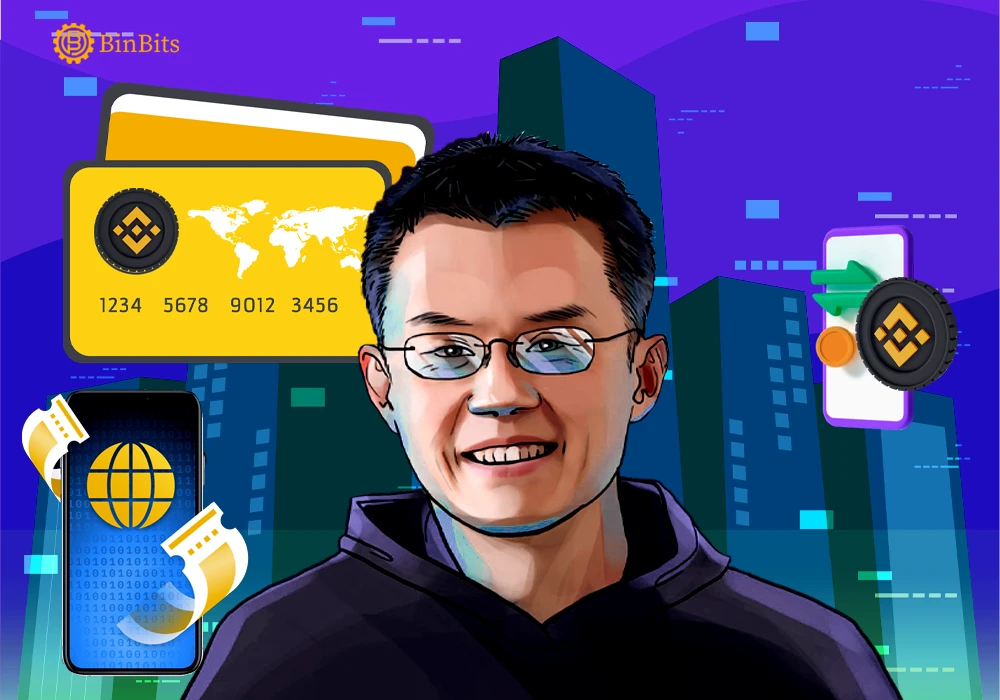

The co-founder and former CEO of Binance, Changpeng Zhao (CZ), has revealed that he’s in discussions with numerous governments regarding the tokenization of assets. He shared this update on Thursday during a panel at the World Economic Forum in Davos.
Tokenisation involves converting real-world assets, such as real estate, infrastructure, or commodities, into blockchain-based tokens that can be traded and divided into fractional ownership units.
CZ while sharing more insight explained further that tokenization could give governments a new way to raise funds by offering small portions of state-owned assets to citizens or investors. This according to him is similar to how some countries have sold stakes in their national oil or telecom companies. According to him, this approach allows governments to generate financial gains upfront and then use those funds to develop key industries.
While CZ didn’t specify the particular government he’s in talks with, in the past he said on social media that he has been in contact with Pakistan, Malaysia, and Kyrgyzstan. Just last year, Kyrgyzstan launched a stablecoin pegged to its national currency, the som. This launch also comes alongside plans for a dollar-pegged stablecoin backed by $300 million in gold reserves.
CZ also commented on the current state of crypto payments, pointing to the convergence of traditional payment methods and cryptocurrencies. He added that in the future, cryptocurrencies will serve as the native currency for artificial intelligence (AI) agents. This means that when AI agents make purchases on users’ behalf, those transactions will be settled using cryptocurrencies.
Pakistan partners with Binance CZ
It’s no secret that CZ is one of the most prominent advocate of blockchain, digital asset and tokenization. Last month, Pakistan’s finance minister, Muhammad Aurangzeb, signed a Memorandum of Understanding with Binance. The MoU aimed to explore the tokenization of sovereign bonds, treasury bills, and commodity reserves valued at up to $2 billion.
This partnership also paves the way for Binance to advise on blockchain-based distribution of Pakistan’s sovereign bonds, treasury bills, and commodity reserves, including oil, gas, and metals. The finance minister described the MoU as a sign of Pakistan’s reform drive and a step toward establishing a “long-term partnership” with Binance.
Read More: